East Hampton Library, April 11, 2026
[Note: These notes are incomplete as of April 10. The unwritten entries will be added by the end of April. We apologize for any inconvenience.]
“Single Girl, Married Girl” (1970).
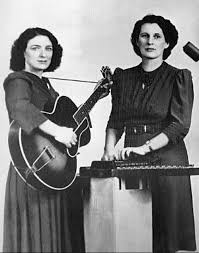
When I say that A.P. Carter wasn’t a songwriter, I mean it in the most literal sense: I’m not aware of a single song bearing his name that he wrote from scratch. Carter famously spend long weeks away from home “song hunting” in the backwoods of Virginia, West Virginia and Tennessee, stopping at people’s houses to ask if they knew any old songs. If they did, and he liked them, he’d transcribe them and bring them home for the Carter Family to sing. So he was more of an arrange of folk songs than an author of any kind of song.
“Single Girl, Married Girl” is unique—and uniquely suited to this show—in that it’s the only Carter Family recording from the Bristol Sessions (and one of only a few in their entire discography) on which A.P. isn’t heard. It’s just Sara Carter, singing and playing the autoharp, and Maybelle Carter playing guitar. Why A.P. isn’t heard on the record is unknown—maybe he was in the room but didn’t feel like singing, maybe he was elsewhere attending to some other business, nobody seems to know. But it’s hard to imagine that the song could have been any better.
Here’s the Carter Family version from 1927, and Levon Helm bringing a distinctly different feel in 2007.
“It Wasn’t God Who Made Honky-Tonk Angels” (J.D. Miller/Traditional, Wells, 1952).
I’ve made the case that Jimmie Rodgers’ “Blue Yodel No. 1 (T for Texas)” (1928) is the most important song in the history of country music. It made a breakout star of Rodgers, and his music was an overwhelming influence on any number of subsequent stars, including Ernest Tubb, Hank Snow, Johnny Cash and Merle Haggard. Country sounds like it does because of “Blue Yodel No. 1.”
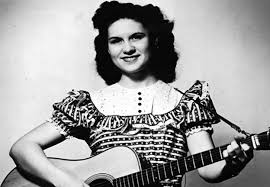
The only other candidate is “It Wasn’t God Who Made Honky-Tonk Angels,” and not only because it was the first-ever No. 1 country hit by a female solo artist and opened the door to generations of iconic female stars.
It also established female country singing as a form of feminist expression (or, in the case of Wells, proto-feminist expression): Female solo artists have always sung songs that weren’t gender-marked, as male artists do, but when they do sing songs that are gender-marked, they are often songs of resistance to male oppression. Loretta Lynn’s “Don’t Come Home a-Drinking” (1967), the Dixie Chicks’ “Goodbye Earl” (1999) and Taylor Swift’s “Mean” (2010) are all linear descendants of Miller’s song.
Here’s Wells’ groundbreaking version, and also (just for fun) a quartet version featuring Loretta Lynn, Dolly Parton, Tammy Wynette and, yes, Kitty Wells. It’s from a 1993 trio album by Lynn, Parton and Wynette; that the album is called Honky-Tonk Angels tells you all you need to know about how important this song was and is.
And, in keeping with equal time provisions, here’s Hank Thompson singing “The Wild Side of Life,” the song that started it all. (The words are by Arlie Carter and William Warren, the tune is a traditional one that was old when the Carter Family used it for “I’m Thinking Tonight of My Blue Eyes.”)
“Making Believe” (Jimmy Work, 1955)
This is maybe my favorite Kitty Wells recording, for her simple, stripped-down performance, yes, but also for the song itself, which is lovely and wistful. It was written by a man (singer/songwriter Jimmy Work), but works well for a singer of either gender. We’ve all been there.
Here’s Wells singing the song, and also Work singing his own song. The best version, though, may be this lovely one by Emmylou Harris. Her slurred “-lieve” annoys me, but even so it doesn’t get much better than this.
“I Can’t Stop Loving You” (Don Gibson, 1957).
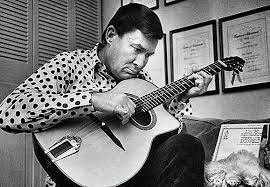
This is a strangely structured song, basically chorus-verse-chorus. Gibson rarely wrote long songs, but even for him this is a short one. And it’s a song in which nothing happens: The whole point of the song is that the singer is stuck in the past, adrift in an endlessly recirculating stream of memory.
The key to my performance (at least as I intend it to be) is a difference of emphasis—of rhythm—in the first line of the chorus. In the first verse, coming out of a brief, three-measure introduction, the emphasis is, as it usually is, on the downbeat: “I can’t stop LOVING you.” “What can’t I stop? Loving you is what I can’t stop.”
The verse offers an apparent solution to his anguish—“they say that time heals a broken heart”—but the solution doesn’t work for him because time doesn’t pass. He’s stuck in an endless repetition of a particularly agonizing moment: “Time has stood still since we’ve been apart.”
Out of this surges the second chorus, with a different accent: “I CAN’T stop loving you.” It’s a fierce rebuke of “they,” an insistence on the undeniability of his own experience. “Why don’t you stop loving her?” “I can’t stop loving her.”
I don’t expect an audience to track this sort of thing—it’s not overthinking in a singer, but it would be overthinking in most audience members. But that’s what’s in my head.
Here are the two classic versions of this song, one by Kitty Wells and the other by Ray Charles. My favorite is Wells’, but I know I’m in the minority. Charles is an all-time great artist, but his embrace of the elevator-music Nashville Sound as “Modern Sounds in Country and Western Music” sets my teeth on edge. They’re modern sounds, all right, but they’re not in country music; I’m not an expert on western music, but they don’t sound like cowboy songs either.
And, for perspective, here’s Gibson’s original version, which is lighter on the Nashville Sound.
“The End of the World” (Arthur Kent and Sylvia Dee, 1962)
I actually don’t love Skeeter Davis’ classic recording, though it truly is a classic. I have no problem with Davis’ vocal, but producer Chet Atkins uses a weird array of instruments (is that a pennywhistle?), vocal filters, overdubs and a spoken narration to convey a song which, at its heart, is about the singer feeling crushed and alone. A more intimate rendition would, it seems to me, suit the song better.
There’s a rugged authenticity about John Mellencamp’s version that I really appreciate—it’s way more country, for one thing. Loretta Lynn’s version is a lot simpler than Davis’ (thanks, Owen Bradley!), and it’s probably my favorite overall.
And then there’s this version by the Andrews sisters. I always love them, but this material isn’t really ideal for them.
Something to listen for in my performance: I have fought a fierce war to keep the word “shine” out of this song, failing frequently in rehearsal. For weeks I kept singing “Why does the moon shine above,” instead of “Why does the moon glow above.” Once I got that out of my head, my subconscious pivoted to “Why do these eyes of mine shine,” instead of “Why do these eyes of mine cry?” I’ve largely put down this uprising, but both errors still pop up once in a while when I’m working on the song. I’ll do my best not to let you hear either one!
Footnote: There’s nothing I hate more in a country song than a spoken recitation. It’s a tradition going back to the dawn of country music, but I really, really don’t like it. I’ve been a stage actor for many years, and I’ve never heard a recitation on a recording that wouldn’t be hissed off the stage by a theatrical audience. They all sound stiff, smarmy or bored, and struggle to stay with the beat. I don’t see the appeal. Don’t expect to hear one in any song I perform!
“Walkin’ After Midnight” (Alan Block and Don Hecht, 1957)
This song came to Patsy Cline only after it was rejected by fellow 4 Star artist Kay Starr. When Cline was signed by 4 Star owner Bill McCall, songwriter Alan Block thought that her voice would be well suited to the song, and suggested to McCall that she record it.
The problem was, Cline agreed with Starr—she didn’t think the song had anything going for it. The song she wanted to cut was the melodramatic “A Poor Man’s Roses (or a Rich Man’s Gold,” but McCall didn’t think that song would sell. Eventually they compromised: McCall would get his way, with Cline recording “Walkin’ After Midnight,” but the B-side would be “A Poor Man’s Roses.”
As it turned out, Cline was wrong and McCall was right, and “Walkin’ After Midnight” became a substantial hit. She continued to sing “A Poor Man’s Roses” in her concert appearances, but it was “Walkin’ After Midnight” that people wanted to hear.
The recording was made at the Bradley Film and Recording Studio in Nashville, with studio co-owner Owen Bradley assisting producer Paul Cohen. It was the first time Cline had met Bradley, but it wouldn’t be the last.
“Sweet Dreams” (Don Gibson, 1956).
Just another short (and, yes, sweet) song by the great Don Gibson. His songs are short because he has a genius for cutting to the chase, getting his idea across and getting out. If I tried to express this idea, I’d do it in three verses, three choruses and a bridge; the verses would probably be six lines long, maybe eight, and the chorus four or six. Call it 36 lines over all.
Gibson gets his job done in 12 lines, and it’s one of the best songs ever written. His version is 1/3 the length of mine, and three times as powerful.
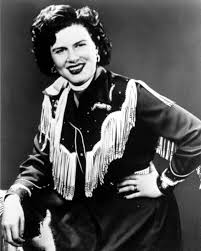
Here’s Patsy Cline’s immortal performance of this song (with an opening five seconds that defines the difference between the Nashville Sound and proper country). By contrast, here’s Gibson’s own version, from 1955, and Reba McEntire’s live version from 1975. They’re both great. (No surprise, Gibson’s runs 2:17 without rushing; McEntire’s runs 3:09, almost a whole minute longer.) Cline’s logs in at 2:32.
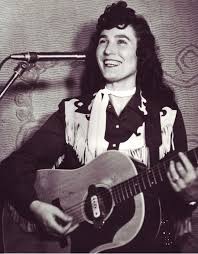
“Before I’m Over You” (Betty Sue Perry, 1963)
This was Loretta Lynn’s biggest hit to this point in her career, a No. 4 hit that put her on the map in Nashville.
I like Lynn’s performance very much, but I think Owen Bradley’s arrangement is too fast and has too much going on, notably with the backup chorus. My version is arguably too stripped-down, but I think less is more with a song like this. In 1965 Bradley returned to this song for a more overtly country version with Ernest Tubb, and I think it works nicely.
They’re all better than the Wilburn Brothers’ weirdo version, though. They trade lines back and forth, and it sounds as if they’re singing to each other.
“Out of My Head (and Back in My Bed)” (Peggy Forman, 1977)
Written by Peggy Forman, this song was Lynn’s 12th No. 1 single, and her last. It’s unusual for a Lynn song in that, while the singer is dissatisfied with her relationship, she isn’t deciding to get rid of her man—she’s already done that, and is instead deciding to get him back.
The lyrics as I perform them are mostly the original words; the only major alteration I make is to change “no other man/can do what you can” to “no other dame/is even half the same.” If this was 1927, I’d simply sing the song in the voice of a woman; if it was 2127, maybe I’d sing it in the voice of a man singing about another man. Being a man of the in-between generation, I prefer to tweak the lyrics!
Here’s Lynn in a typically take-no-prisoners performance.
At this point in the show, the show order becomes randomized, and not every song listed below will be heard in any given performance. I have accordingly listed them hereafter by the last name of the singer with whom they are most associated.
Emmylou Harris: “Beneath Still Waters” (Dallas Frazier, 1968)
This lovely song was written by Dallas Frazier (1939-2022), a Bakersfield Sound artist who began as a teenage singer and guitarist, but never achieved real success as an adult. He increasingly moved into songwriting, and was considerably more successful there until 1988, when he left show business to become a minister.
George Jones made the first recording of the song for his 1968 album My Country, but didn’t release it as a single. Twelve years later, Harris took the song to No. 1 on the country charts.
Six weeks later it figured in a record-breaking week: For the week of April 19, 1980, the top five positions on the Billboard Country Singles chart were all occupied by women, the first time that had ever happened. “Beneath Still Waters” was No. 4 that week, trailing singles by Crystal Gayle, Dottie West and Debbie Boone, but ahead of Tammy Wynette.
Here’s Harris’ classic performance, and also the uncharacteristically lilting treatment by George Jones.
Faith Hill: “Someone Else’s Dream” (1971)
Miranda Lambert: “Bluebird” (1974)
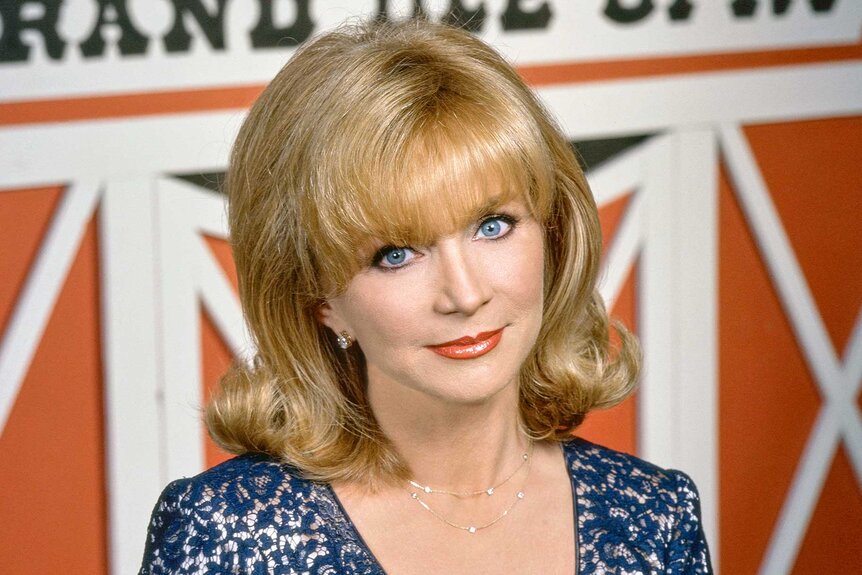
Barbara Mandrell: “Til You’re Gone” (1986)
My version is considerably different in style than the Mandrell original, because the pop-charged arrangement put together by producer Tom Collins for that recording isn’t really suited to a solo piano. Those who don’t like it are referred to the Mandrell recording, which is excellent in its own right.
I really like this song, and it surprises me that they aren’t a lot of covers out there. The only one I can find is this Springbok version, which is pretty similar to the Mandrell.
Reba McEntire: “You Lie” (1990)
Lorrie Morgan: “Five Minutes” (1969)
Anne Murray: “A Little Good News” (1972)
Kacey Musgraves: “Follow Your Arrow” (Kacey Musgraves, Brandy Clark and Shane McAnally, 2013)

A lot of people love this song, me among them. It won the “Song of the Year” prize at the 2014 Country Music Association Awards, and in 2024 Rolling Stone included it among “The 200 Greatest Country Songs of All Time.” Which, frankly, seems a bit of a stretch to me, but whatever.
That said, the song is overwritten, perhaps because it’s the work of three writers. They begin by coming up with a clever twist rhyme:
If you save yourself for marriage, you’re a bore;
if you don’t save yourself for marriage, you’re a hor-
rible person.
It’s a great line, but they clearly tried hard to come up with something equally clever and failed to do so. They follow it with two rhymes that are so forced that some listeners (the lucky ones) won’t even realize that they’re there:
If you won’t have a drink, then you’re a prude,
but they’ll call you a drunk as soon as you d-
own the first one.
If you don’t go to church, you’ll go to hell
but if you’re the first one in the front row, you’re a sel-
frighteous son of a …
The first verse’s “you’re a hor-“ works because it tricks the listener into initially misreading the line as the end of a sentence. “You’re a whore” makes sense as the end of the thought, so when the sentence actually goes on, it’s surprising and funny.
The second and third rhymes don’t work, because “as soon as you’d” or “you’re a sell” would never be the end of an English sentence. Thus there’s no surprise—and hence no laugh—when it turns out that the sentence is going on.
In situations like this, the smart songwriter keeps the funny part and gives up on the not-funny parts. There’s no law that says a joke in the first verse must be followed by jokes at the same point in future verses.
None of which keeps me from loving the song as a whole (which you can hear right here). And I love the title of the album from which it comes, Same Trailer Different Park. (I’d like it better with a comma after “Trailer,” but that’s just me.)
Dolly Parton: “I Will Always Love You” (Dolly Parton, 1974)
A lot of people will tell you that in The Bodyguard (1992), when Frank Farmer and Rachel Marron (Kevin Costner and Whitney Houston) are at a bar together, they dance to Dolly Parton’s recording of this song, and that’s what inspires Marron to later record the pop version that made Whitney Houston the voice of the song for millions of people around the world.
That’s all true, except for one detail: The version of “I Will Always Love You” that they hear in the bar isn’t Dolly Parton’s. It’s by a lesser-known singer named John Doe (whose stage name—his real name is John Nommensen Duchac—seems calculated to keep him little known).
Famously, this isn’t a romantic song: Parton wrote it as a farewell to her employer and stage partner, Porter Wagoner, as she was venturing forth on a solo career. It’s often presented as a touching tribute to Wagoner and an expression of her enduring affection for him. (They were not romantic partners.)
Most of the people who think that way haven’t really listened to the song.
First of all, it’s on the face of it untrue. Parton says that, if she stayed with Wagoner, she’d only be in his way, and that they both know she isn’t what he needs. In reality, she was what he needed, and it was he who was in her way, not her in his: By 1974 Parton was a rising star and Wagoner an aging veteran whose best years were behind him; they both knew that, if she split with him, her star would rise and his would wane, and that’s exactly what happened.
Second, she says that all she’s taking away with her are “bittersweet memories.” To me that suggests that their relationship had been troubled for some time, probably because she felt hobbled by her status as the junior partner in the team. I imagine that he considered her ungrateful and she considered him exploitative of her and her talents, which were (and are) many.
So it’s a more complicated song than it appears on the surface, and I doubt that Wagoner was thrilled with its success. But complicated songs are fun to sing!
The song has been covered a great deal—six times prior to 1992, and more than 300 times since then! But the primary reference points remain the same: Parton’s version and Houston’s version. Compare and contrast! (Given the hat I wear, you can probably guess my preference.)
Just for fun, though, here’s a lovely 1975 performance (more Partonesque than Houstonian) by Linda Ronstadt. And here’s John Doe’s version.
Dolly Parton: “9 to 5” (1970)
Gretchen Peters: “On a Bus to St. Cloud” (Gretchen Peters, 1995).
This lovely song is best known in its original recording, by Tricia Yearwood, which was deservedly a big hit in 1995. I prefer the 1996 recording by Peters herself, for its simplicity—Yearwood’s version is beautifully sung, but its lavish production works against the wistful nature of the material. Besides which, I always like simple better than lavish.
Sometimes I love a song for the lyrics, and certainly Peters writes a beautiful lyric here. A series of small snatches of experience adds up to a cumulative sense of loss and regret that builds to the frenzied release of the final “And you chase me like a shadow, and you haunt me like a ghost.” Beautifully done.
And yet it’s a musical choice that sticks with me. The unexpected A-minor chord in the third line of the chorus (on the word “face”) really gets me, every time.
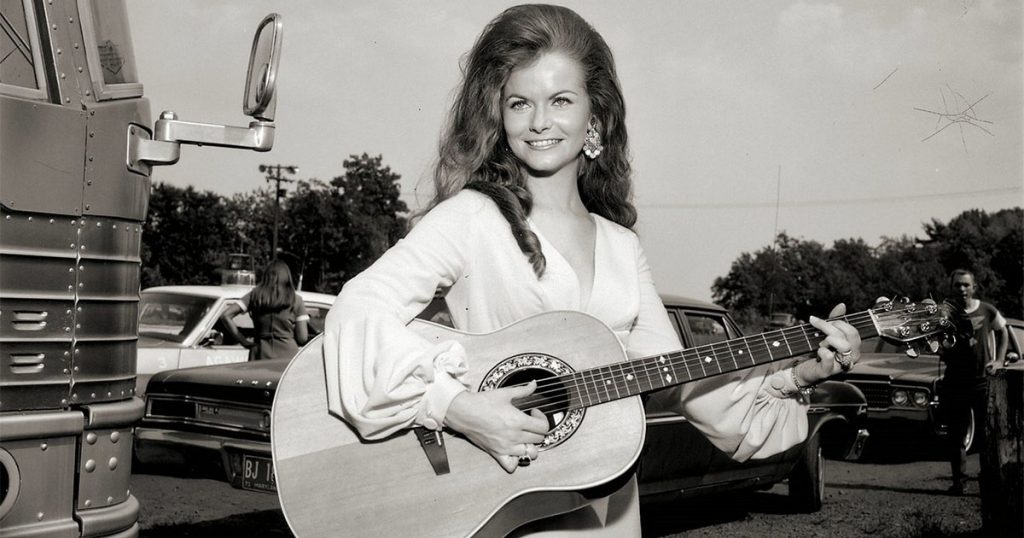
Jeanne C. Riley: “Harper Valley PTA” (1968)
It’s hard to overstate the impact of this song, which was released in 1968 on the tiny label Plantation Records, but nevertheless shot to No. 1 on both the country charts and the pop charts. It won novice Jeanne C. Riley a Grammy Award for Best Country Female Vocal Performance, and in 2019 the recording was inducted into the Grammy Awards Hall of Fame.
Barbara Eden played Ms. Johnson in the 1978 movie adaptation, and also in the 1981 television series, which ran for two seasons on NBC.
Lots of choices here, since the song has been covered by a Who’s Who of late-20th-century female country stars, including Dottie West, Loretta Lynn, Dolly Parton, Lynn Anderson and Martine McBride.
Here’s Riley’s original recording, which remains a classic, and the Parton version, along with a rare male recording by Billy Ray Cyrus. And, just for fun, the 1984 sequel, “Return to Harper Valley,” which reunited Riley and songwriter Tom T. Hall; much tamer and with a dollop of religion, it sank without a trace.
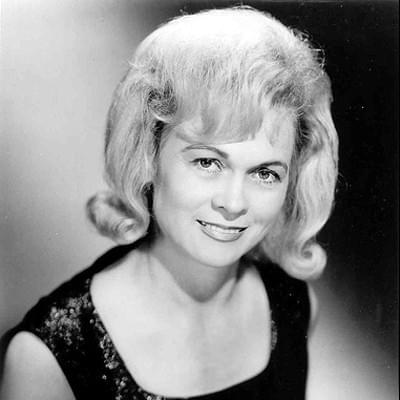
Jean Shepard: “Slippin’ Away” (1986)
Connie Smith: “Once a Day” (2013)
Taylor Swift: “Back to December” (Taylor Swift, 2010)
I get a lot of pushback from people—especially the people who love the kind of music I love—when I say that I consider Swift the greatest living songwriter under the age of 60. They also give me the stinkeye when I say that she’s one of the greatest country songwriters ever.
But I’m not engaging in rhetorical excess. I think that Swift’s first three albums, Taylor Swift (2006), Fearless (2008) and Speak Now (2010), are easily better than any other country artist’s best three albums in the new century, and rank with some of the best country albums of all time. Kristofferson (1970) is a better album than Fearless, I’ll admit, but not by much—and that’s setting the bar awfully high. And I revere Kris Kristofferson, but I’m not sure that, in his whole career, he’s put out three albums that are as good as the three Swift had put out by the time she turned 20. The Silver-Tongued Devil and I (1971), yes, absolutely—but then what?
What Swift did in her country years was exactly what Hank Williams did, what Loretta Lynn did, what Kristofferson and Willie Nelson did. She took emotionally powerful stories, mostly from her own life, and set them to music with wit, passion and a recklessness that has been missing from Nashville since … well, at least since the 1970s.
I don’t say this easily, because to me most of contemporary country is an artistic wasteland, having ceded to hip-hop the artistic courage, the emotional freedom and the simple sincerity that characterized the best country of the 1920s through the 1950s. I stumbled across Swift in 2009 while making a survey of contemporary country, looking for artists who spoke to me the way Williams, Tubb, Snow, Lynn, Nelson and Kristofferson did. By and large, that survey was depressing; it convinced me that my rejection of country during my youth in the 1970s and 1980s was largely reasonable.
But I kept an open mind, and this teenage girl from Pennsylvania gave me hope for the whole thing. I don’t write the way she does (I’m a 65-year-old man from New York), but she’s one of the reasons I write. She proves that you don’t have to be a dead white Southerner from the 1930s or earlier to be a great country songwriter.
And that she was a voice for young women in Nashville, a city which has precious few of them, doesn’t mean that she doesn’t “sound like country.” Country used to want to sound like the real world and, last I heard, young women were real people. Country music is what doesn’t sound like country any more.
Swift is a good-enough singer, not a great one, and her songs are often overproduced. Not all her songs measure up to her best (whose do?). Her detour into pop music in the past decade has been deeply disappointing. But I’m hoping that she comes back to country, because it needs her desperately.
But enough from me. Listen to Swift’s “Fifteen” (2008), “Mean” (2010) and, yes, “Back to December” (2010), and meet me back here later on. Then we can talk.
Tanya Tucker: “If It Don’t Come Easy” (Dave Gibson and Craig Karp, 1988)
This song is like a rebuttal to everything Hank Williams ever wrote—no, make that “every country song ever written.” That may be why I like it so much.
The message that love is all very well, but you shouldn’t let it make you miserable, is itself a fresh song idea, not to mention a sensible notion that would improve the world greatly if it spread.
And, of course, Tucker’s performance is outstanding.
I love this song, and I find it hard to believe that there aren’t any cover versions out there—especially since it was a No. 1 hit by a major artist. The only one I can find is this one by a charismatic amateur whose name I don’t know.
Shania Twain: “No One Needs to Know” (Shania Twain and Mutt Lange, 1996).
Tammy Wynette: “D-I-V-O-R-C-E” (Bobby Braddock/Curly Putman, 1968).
The thing I’ve never gotten about this song is the artists who have covered it since Wynette made the original version: Liz Anderson, Rosanne Cash, Norma Jean, Peggie Little, Dolly Parton, Dottie West etc. Other than a couple of parodies (notably Billy Connolly’s 1975 takeoff), everyone I’ve ever heard of who recorded it was, yes, a woman. As, of course, is the case in Wynette’s classic version.
People seem to regard this as an iconically female song, like Loretta Lynn’s “Don’t Come Home a-Drinking” (1967) or Wynette’s “Stand By Your Man” (1968). I don’t see why, though. Don’t fathers love their children? Is a wife whose husband leaves her automatically more heartbroken than a husband whose wife leaves him?
In at least one way, the song works better for a man: When I sing it, I change a single word in the lyrics, changing “Me and little J-O-E will be going away” to “You and little J-O-E will be going away.” This reflects the fact that, more often than not, courts give custody to the mother in a divorce—but it also makes the song sadder, the heartbreak more understandable. Losing your spouse and your child is worse than simply losing your spouse.
I have absolutely no trouble connecting with the emotional content, and it amazes me that more male artists haven’t covered it.
(One more thing about this song, something extremely cool that nobody else seems ever to have recognized, or at least published: The original recording is in two different keys—the first verse built around a D chord and the second verse around an E chord. That’s because the first verse is in the key of D and the second verse is in the key of E. Most of the time, when a song is written in a particular key, it stays in that key, which means that its first chord and last chord are both the key chord. But this one changes in the middle, so the first chord in the first chorus is a D, but the last chord in the last chorus is an E. And the lyric on that first chord is “D -I-V …, “ and the lyric on that last chord is “… -O-R-C- E.” How cool is that?)
Carrie Underwood: “Blown Away” (Chris Tompkins and Josh Kear, 2012)
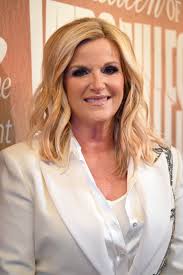
Trisha Yearwood: “Georgia Rain” (Ed Hill and Karyn Rochelle, 2005)
This beautiful song combines two of my favorite country-music songwriting tropes: weather that reflects the character’s emotions, and a final verse that jumps ahead in time to look back, presumably with greater perspective, on the events of the earlier verses.
There are a million examples of the former, including the Fred Rose song “Blue Eyes Crying in the Rain” (most famously recorded by Willie Nelson) and the Carrie Underwood hit “Blown Away.” Two of my favorite examples of the latter are Loretta Lynn’s “Coal Miner’s Daughter” and Kris Kristofferson’s “Jody and the Kid.”
The rhyming doesn’t work unless the song is sung in a Georgia accent, in which “in,” “when,” “again” and “skin” all rhyme with one another.
Among the backup singers on Yearwood’s recording is her husband, Garth Brooks.
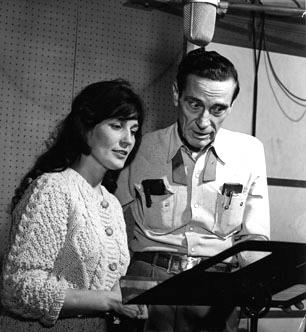
And we now return to our regularly scheduled programming. Of these next two songs, the first is rarely in the show, but is always next-to-last when it is; the second is always in the show, and always last.
“Sweet Thang” (Nat Stuckey, 1966)
“Anyway” (Martina McBride, Brad Warren and Brett Warren, 2006)
 Tennessee Walt